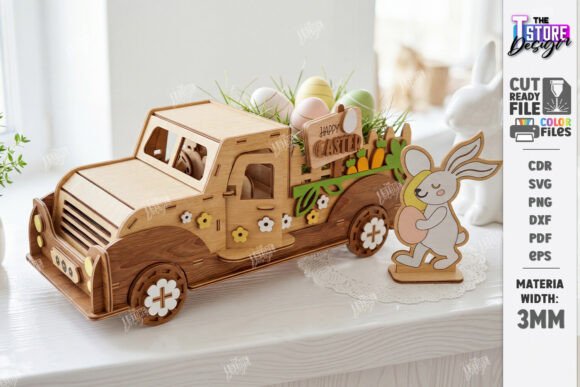
3D Easter Bunny Truck Laser Cut Design
The intersection of seasonal decor and digital fabrication offers a unique opportunity for creators to blend festive aesthetics with technical precision. The 3D Easter Bunny Truck Laser Cut Design represents more than just a holiday decoration; it is a structured project that requires careful planning, material selection, and assembly logic. For professionals in the maker space, small business owners producing limited-run crafts, or hobbyists looking to refine their laser cutting skills, this design serves as an excellent case study in managing layered complexity within a single physical object.
This digital asset is engineered specifically for 3mm plywood, a material choice that balances structural integrity with ease of cutting. The design leverages the capabilities of modern laser cutters, including Glowforge machines, CNC routers, and other compatible vector-cutting devices. By understanding how this file integrates into your existing workflow, you can streamline production, minimize material waste, and achieve consistent, high-quality results every time you create a centerpiece for the season.
Understanding the Digital Asset Structure
Before initiating any cut, it is crucial to understand the composition of the digital package. A robust digital product for laser cutting is not merely a single image file but a comprehensive archive designed to accommodate different software environments and user preferences. This particular design includes a ZIP archive containing multiple file formats: one SVG, one EPS, one transparent PNG, one PDF, and one DXF file.
Each format serves a specific purpose in the pre-production phase:
- SVG (Scalable Vector Graphics): Ideal for direct import into many modern laser cutter interfaces like Glowforge. It preserves vector data, allowing for infinite scaling without loss of quality.
- EPS (Encapsulated PostScript): A standard format for professional graphic design workflows, often used when integrating laser cuts into larger branding materials or packaging designs.
- DXF (Drawing Exchange Format): The preferred format for users working with LightBurn or older CAD software. As noted by developers, LightBurn can sometimes distort dimensions when processing SVG files, particularly those with complex paths or embedded metadata. Using the DXF file ensures that the scale remains accurate and the layers are interpreted correctly by the machine’s control software.
- PNG (Portable Network Graphics): Provided in a transparent version, this file is useful for visualization, mockups, or previewing the design layout before committing to physical materials.
- PDF: Useful for printing reference guides or creating manual templates if digital interfacing is not available.
For practitioners who prioritize efficiency and accuracy, starting with the DXF file is often the most prudent decision. This reduces the need for post-import adjustments and ensures that the intricate details of the bunny truck—such as the wheel spokes, egg baskets, and decorative patterns—are translated exactly as intended.
Material Preparation and Compatibility
The success of a 3D laser-cut assembly relies heavily on the consistency of the raw material. This design specifies 3mm plywood, which is a versatile thickness for desktop laser cutters. However, "plywood" is a broad category, and variations in density, adhesive content, and surface finish can significantly impact the cutting process.
When preparing your workspace, consider the following factors:
- Surface Flatness: Ensure your sheet of plywood is flat. Warped sheets can cause focal distance issues in fiber or CO2 lasers, leading to inconsistent cut depths or burnt edges.
- Adhesive Quality: Lower-quality plywood may contain glues that release excessive smoke or toxic fumes when cut. Always verify that your material is safe for indoor laser cutting or ensure adequate ventilation systems are active.
- Color Consistency: If you plan to paint or stain the finished piece, note that the natural grain of the plywood will affect the final appearance. Some users prefer sanded plywood for a smoother finish, while others appreciate the rustic texture of raw birch or maple veneer.
Compatibility with your specific hardware is non-negotiable. While the design is optimized for 3mm material, users operating CNC routers must adjust their toolpaths to account for bit width and kerf compensation. Laser cutter users should calibrate their power and speed settings based on their machine’s specific wattage. A test cut on a scrap piece of the same material is always recommended to fine-tune these parameters before committing to the full production run.
Workflow Integration: From File to Centerpiece
Integrating this design into a creative workflow involves more than just pressing "cut." It requires a systematic approach to organization, layer management, and assembly strategy. Here is how this project fits into broader production processes.
Layer Management and Software Setup
Once the file is imported into your software (LightBurn, Adobe Illustrator, or CorelDRAW), the first step is verifying the layer structure. Complex 3D designs rely on distinct layers for different operations: cutting outlines, engraving details, and scoring fold lines. Misinterpreting these layers can result in a fragile model or misaligned components.
If you are using LightBurn, import the DXF file to avoid dimension distortion. Check that all vectors are closed and that there are no overlapping lines that could cause double-cutting errors. Assign appropriate power and speed settings to each layer. Typically, outer contours require higher power for clean cuts, while internal details might benefit from lower power to prevent scorching the delicate wood fibers.
Assembly Logic and Spatial Planning
The core appeal of the 3D Easter Bunny Truck lies in its layered construction. The design creates depth by stacking multiple wooden planes. To execute this efficiently, organize your pieces by size and complexity. Smaller, intricate parts should be nested carefully within the larger sheets to maximize material usage and reduce waste—a critical consideration for entrepreneurs aiming to maintain healthy profit margins.
During the assembly phase, the "egg display space" integrated into the truck bed becomes a focal point. This area requires precise alignment to ensure stability. Use temporary adhesives, such as low-tack tape or positioning pins, to hold layers together before applying permanent glue. This allows for corrections if minor discrepancies in cutting tolerances arise.
Strategic Applications and Market Positioning
For small business owners and makers, the 3D Easter Bunny Truck Laser Cut Design offers several strategic advantages beyond simple decoration.
Product Diversification: Adding a 3D element to a lineup of flat laser-cut items can differentiate a brand. Customers often perceive 3D objects as higher value due to the perceived complexity and craftsmanship involved. This can justify a higher price point and attract customers looking for premium home decor.
Seasonal Marketing: Easter is a key moment in the retail calendar. Producing this centerpiece allows businesses to capitalize on spring-themed marketing campaigns. The design’s versatility means it can be sold as a standalone item, or potentially customized with engraved names or logos for corporate gifts, further expanding its utility.
Community Engagement: For educators and workshop leaders, this design serves as an excellent teaching tool. It demonstrates principles of spatial reasoning, material science, and digital-to-physical translation. Guiding students through the process of assembling a multi-layered object reinforces attention to detail and problem-solving skills.
Quality Control and Long-Term Usability
To ensure the longevity and aesthetic appeal of the final product, implement a rigorous quality control checklist. Inspect each piece for burn marks or incomplete cuts before assembly. Sand any rough edges gently to prevent splinters, especially if the item will be handled by children or displayed in high-traffic areas.
Consider the finishing process as part of the workflow. Whether you choose to leave the wood natural, apply a clear coat for protection, or use acrylic paints for vibrant colors, the preparation of the surface affects the final outcome. A matte finish might highlight the grain, while a glossy sealant can enhance the vibrancy of painted details.
Furthermore, proper storage and handling instructions should be considered if selling the product. Packaging should protect the layered structure from shifting during transit. Including a brief assembly guide with your product adds value and reduces customer support queries, streamlining the post-purchase experience.
Support and Continuous Improvement
Technology and software ecosystems evolve rapidly. Users encountering issues with file compatibility or unexpected results should not hesitate to seek support. The creator of this design encourages communication regarding specific file requirements or alternative color sizes for PNG previews. Engaging with the creator can provide insights into best practices for new software updates or emerging material types.
Following the creator’s updates also provides access to future releases. The maker ecosystem thrives on iteration and improvement. By staying connected, users gain early access to refined designs, additional accessories, or complementary assets that can expand their creative possibilities. This proactive approach to resource management ensures that your toolkit remains current and effective.
In conclusion, the 3D Easter Bunny Truck Laser Cut Design is a well-structured asset that rewards careful preparation and execution. By leveraging the correct file formats, selecting appropriate materials, and adhering to a logical assembly workflow, creators can produce stunning, durable centerpieces. Whether used for personal enjoyment, educational purposes, or commercial gain, this design exemplifies the potential of digital fabrication to bring festive ideas to life with precision and elegance.